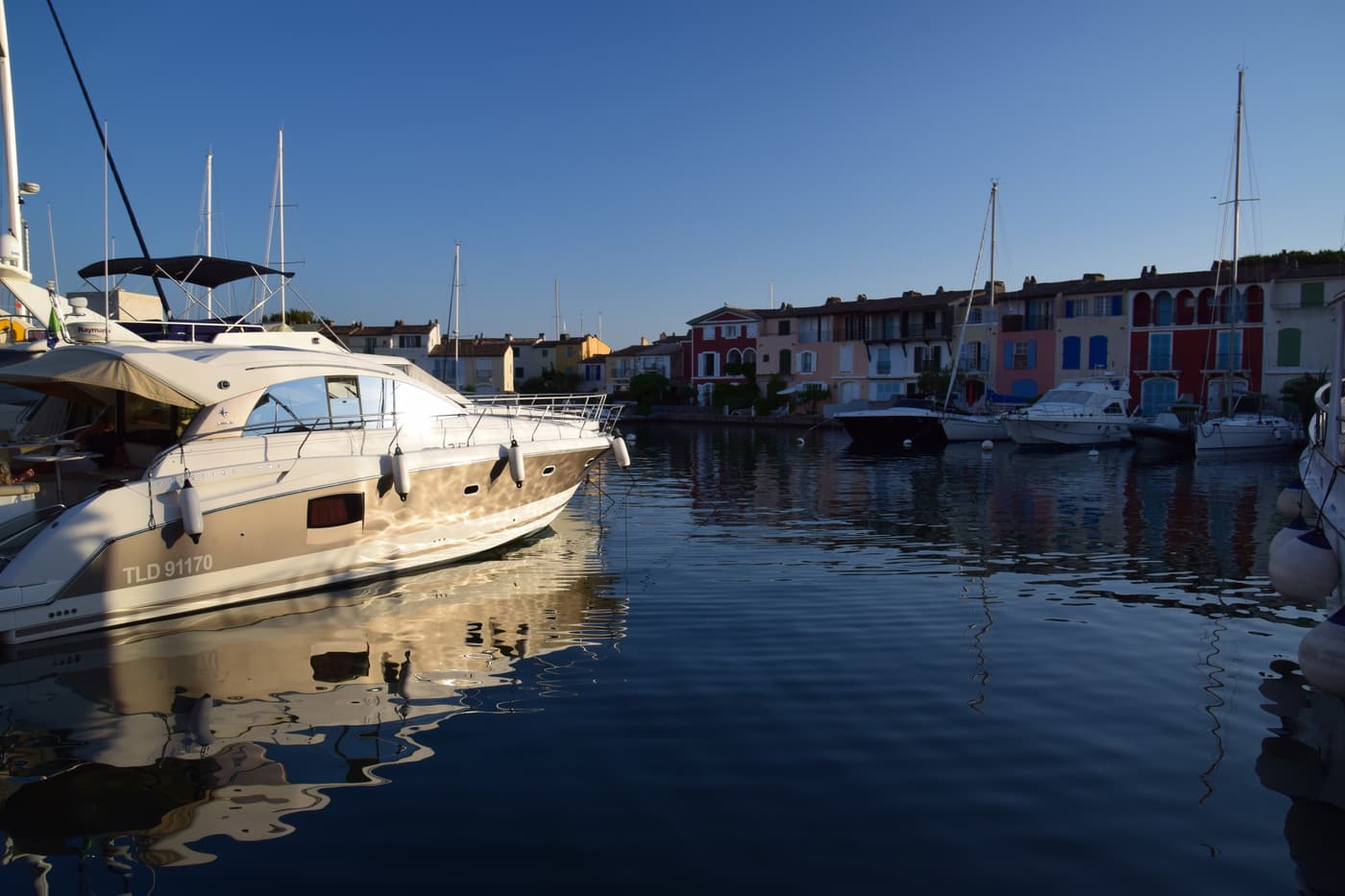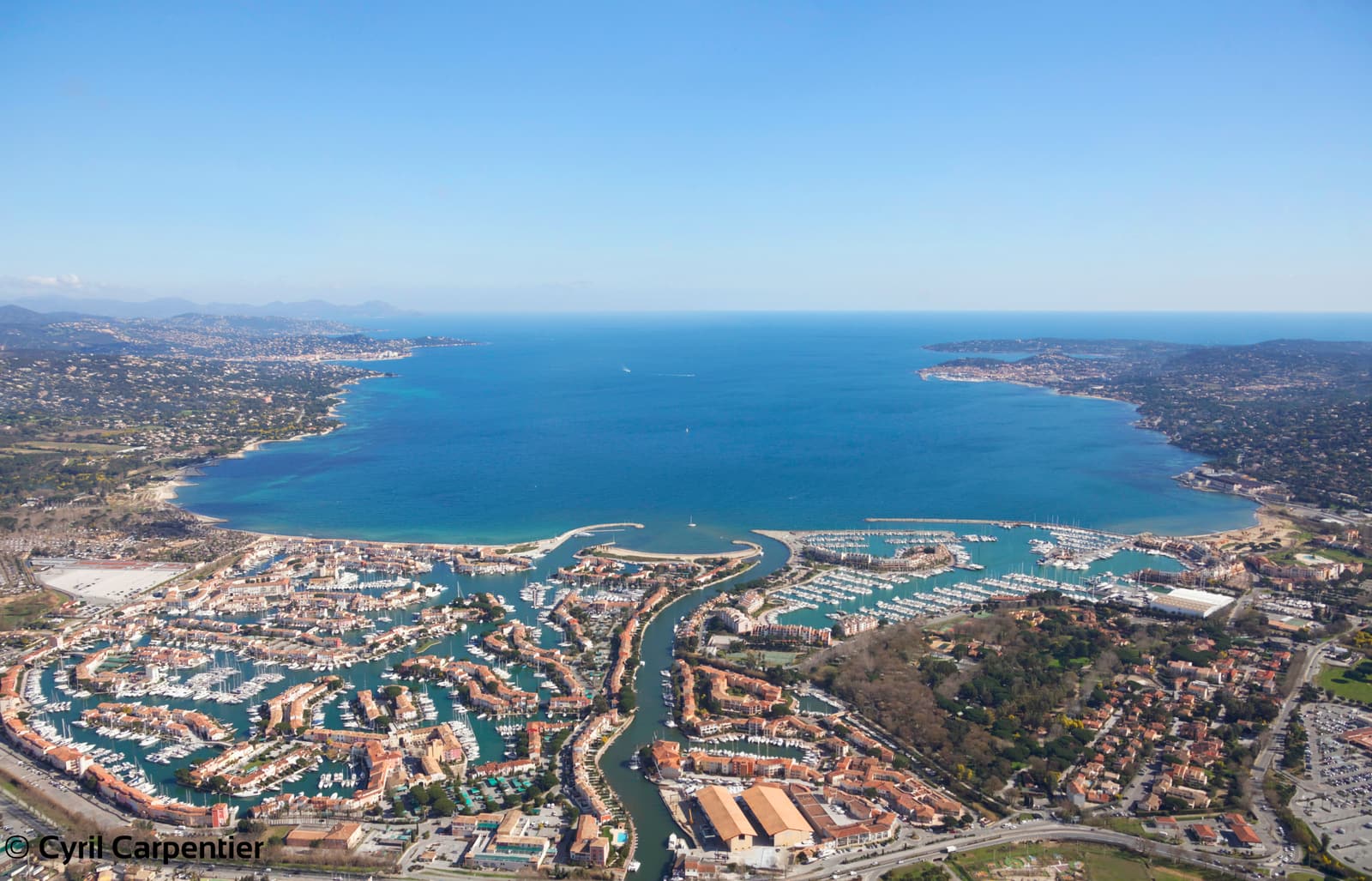
Port Grimaud is a modern village that looks old: a mid-20th-century dream of a Provençal fishing port, built on reclaimed marsh with a canal instead of a road outside every door.
A short history
The Alsatian architect François Spoerry (1912–1999) kept a house at Cavalaire and, in 1962, learned that marshy land near the mouth of the Giscle was for sale. He bought it and spent three years on the plans. The first building permit dates from June 1966; the founding square is still called the Place du 14-Juin. Islands were marked out with steel piling and raised with the spoil dug from the canals, and only then was the sea let in.
The first 75 houses were handed over in the summer of 1967. To make it look old, Spoerry reused tiles, timbers and ironwork from a demolished district of Romans-sur-Isère. The village grew in stages into the 2000s, becoming three districts: Port Grimaud I, II and III, run by separate owners’ associations. Since 2001 it has carried France’s label for 20th-century heritage.
It has critics as well as admirers: the project erased a wetland, and the rising sea and storms are a real concern today. Yet it influenced waterfront developments around the world.
What to see
Begin with the canals and a coche d’eau, climb the tower of the church of Saint-François, then swim from the beach. Beyond the village, go up to old Grimaud, cross to Saint-Tropez and spend a day on the peninsula around Ramatuelle and Gassin.
Places around Port Grimaud
 The lagoon village
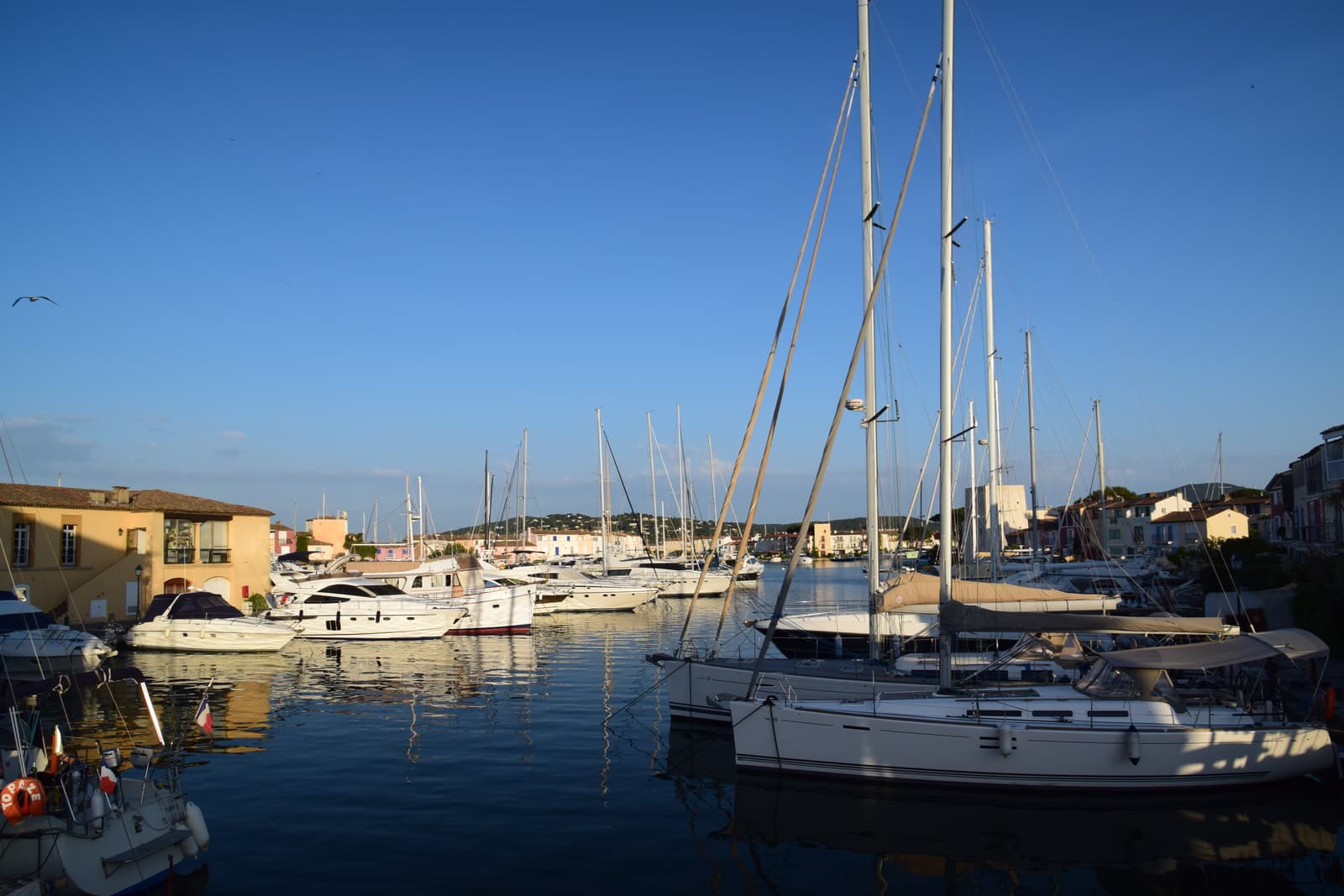
The canals of Port Grimaud
The “Venice of Provence”: pastel houses, bridges and a boat at every door.
The lagoon village itself: about 7 km of canals and 14 bridges built from 1966 on the marshes of the Giscle. Walk the quays, cross the humpback bridges and see it properly from the water on a coche d’eau.
 The lagoon village
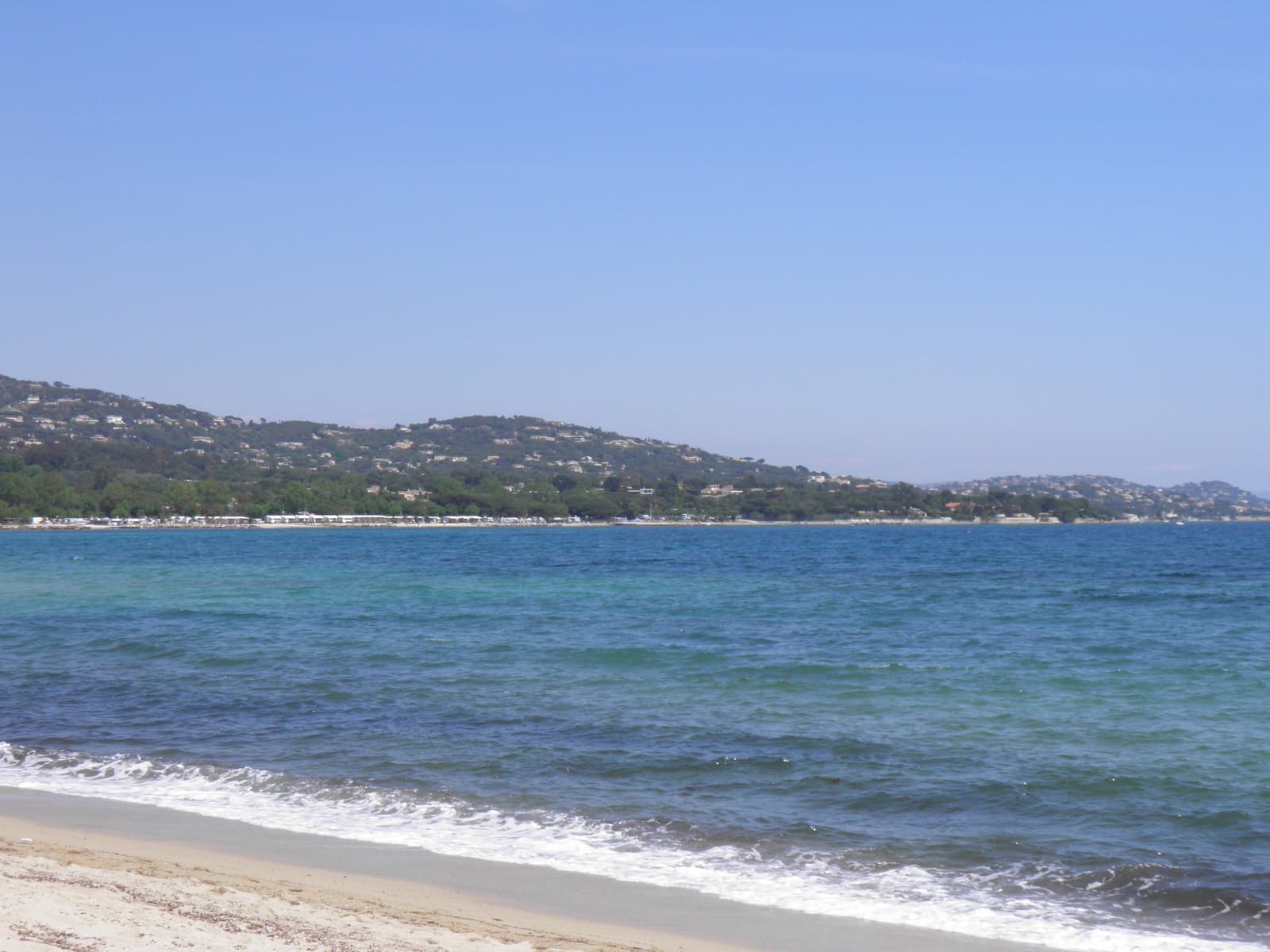
Port Grimaud beach
A long sandy shore on the gulf, a few minutes from the canals.
The Grand’Rue of the lagoon village runs right behind a sandy beach at the head of the gulf, with Sainte-Maxime and the Maures hills across the water. It is calm, easy and good for families.
 Old Grimaud
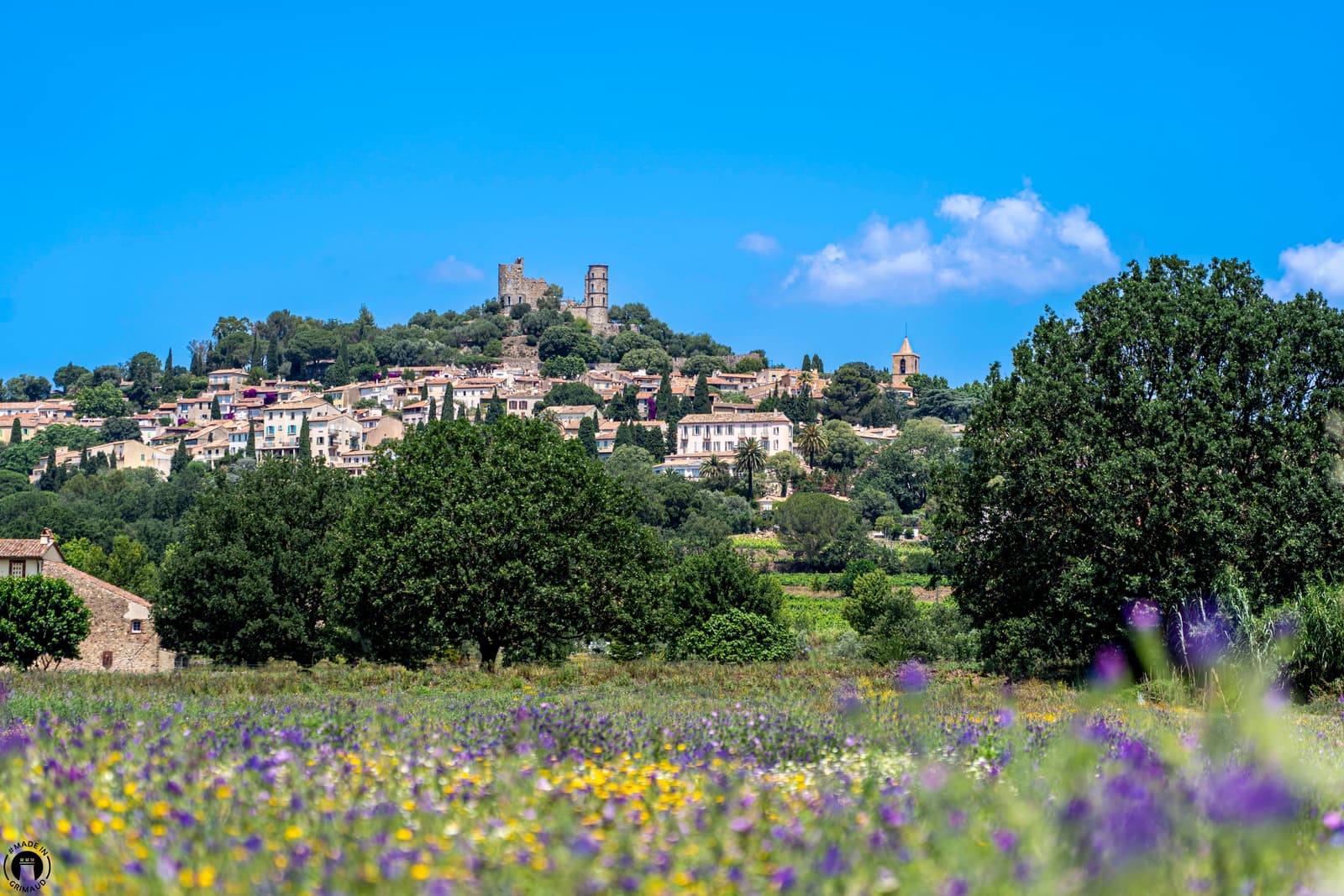
Grimaud village & castle
The medieval hilltop village behind Port Grimaud, crowned by a ruined castle.
About 5 km inland, old Grimaud climbs a hill at the foot of the Maures, with the ruins of its 11th-century castle on top. Stone lanes, a Romanesque church, the Saint-Roch windmill and wide views back over the gulf.
 Around the gulf
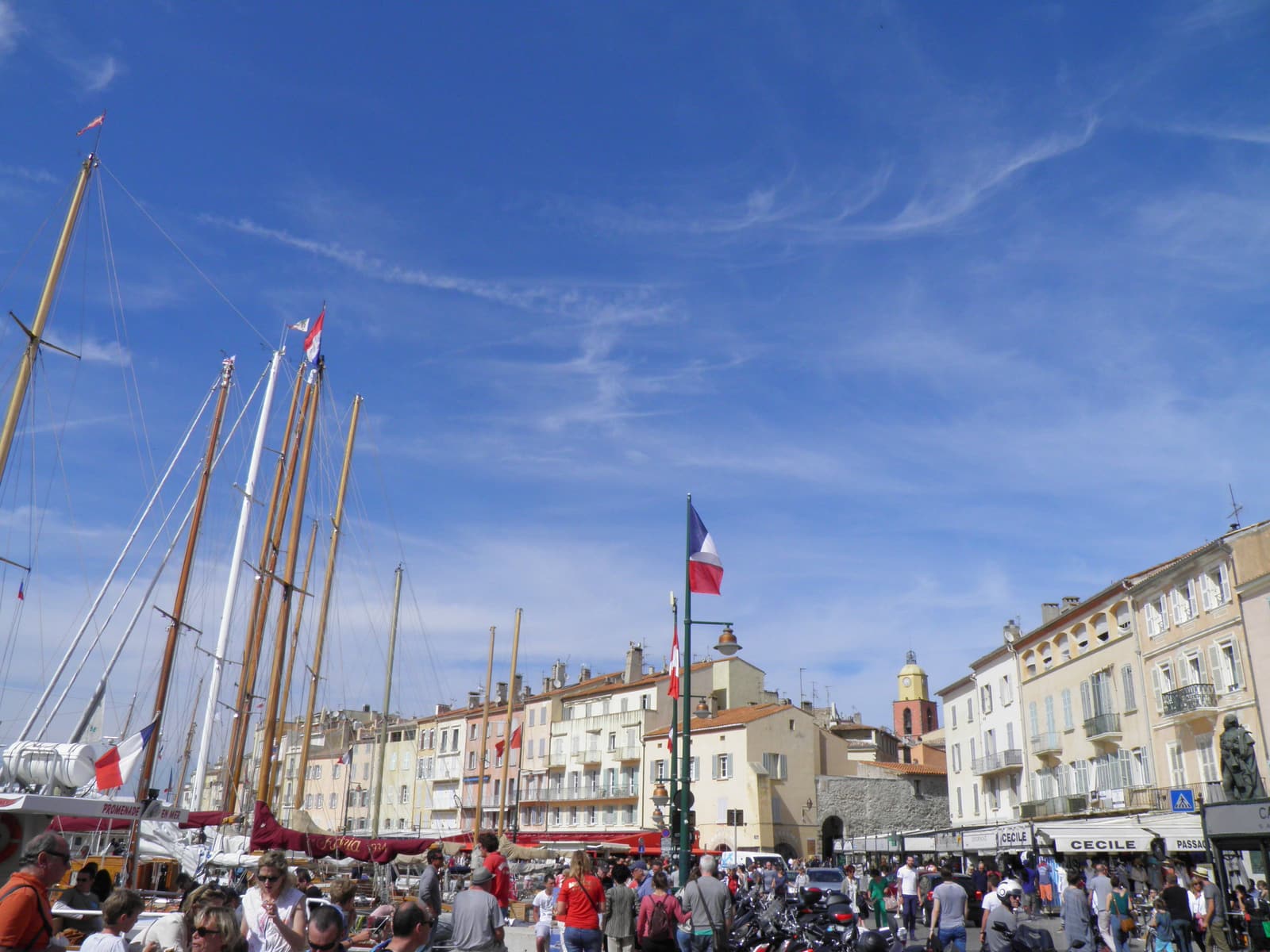
Saint-Tropez
The most famous harbour on the Riviera, a boat ride from Port Grimaud.
Yachts on the Vieux Port, painters on the quay, the market on the Place des Lices, the citadel above the town and the old quarter of La Ponche. In season the shuttle boat from Port Grimaud beats the road.
How long to stay
A few hours will do for the village alone. Three or four nights let you see the gulf properly, and a week suits a beach holiday with day trips.
Sample itineraries
One day
Morning walk and coche d’eau, church tower, lunch on the Place du Marché, the beach, then sunset dinner up at Grimaud or Gassin.
Three days
Day one in Port Grimaud. Day two by boat to Saint-Tropez for the market, the citadel and the coast path. Day three to Ramatuelle, the Paillas windmills and Pampelonne.
One week
Add a sailing trip, a wine tour, Sainte-Maxime and a longer outing from the day trips guide, such as the Estérel or Bormes-les-Mimosas.
Food and drink
Restaurants around the Place du Marché are mostly simple and tourist-minded: pizza, grilled fish, salads, ice cream. For something more distinctive, look to the hill villages or Sainte-Maxime. Local rosé, Côtes de Provence, is the natural choice. Look for tapenade, pissaladière, and the tarte tropézienne, a cream-filled brioche made famous in Saint-Tropez.
Money and costs
France uses the euro and cards are accepted almost everywhere, but carry a little cash for the church tower and market stalls. The gulf is expensive by French standards in high summer. Save money by self-catering, using markets and staying a little inland.
Safety and practicalities
- France’s emergency number is 112; for sea rescue, dial 196.
- Summer forest fire risk is high in the Maures. Respect closures of massifs and any fire bans.
- Sun protection and water matter from May to September.
- Mosquitoes can be active around still water at dusk.
- The village is a residential area: keep noise down and do not walk on private quays.
- Lock valuables out of sight in parked cars.
Packing
Swimwear, light layers, a hat, sandals for the sand, and proper shoes for cobbled villages. Bring a light jacket for spring and autumn evenings and windy days.